Skip to main contentSkip to footer

What is Dramatherapy?

Dramatherapy Defined

According to the British Association of Dramatherapists: ‘Dramatherapy has as its main focus in the intentional use of healing aspects of drama and theatre as the therapeutic process. It is a method of working and playing that uses action methods to facilitate creativity, imagination, learning, insight and growth’.

You do not need to be an actor to do dramatherapy nor does it rely on role play. Dramatherapy was first used by Peter Slade a drama teacher in the 1930s to describe a different approach to working with children and adults using creative approaches. It was developed further throughout the 1960s and 1970s when training courses were first set up in the UK.
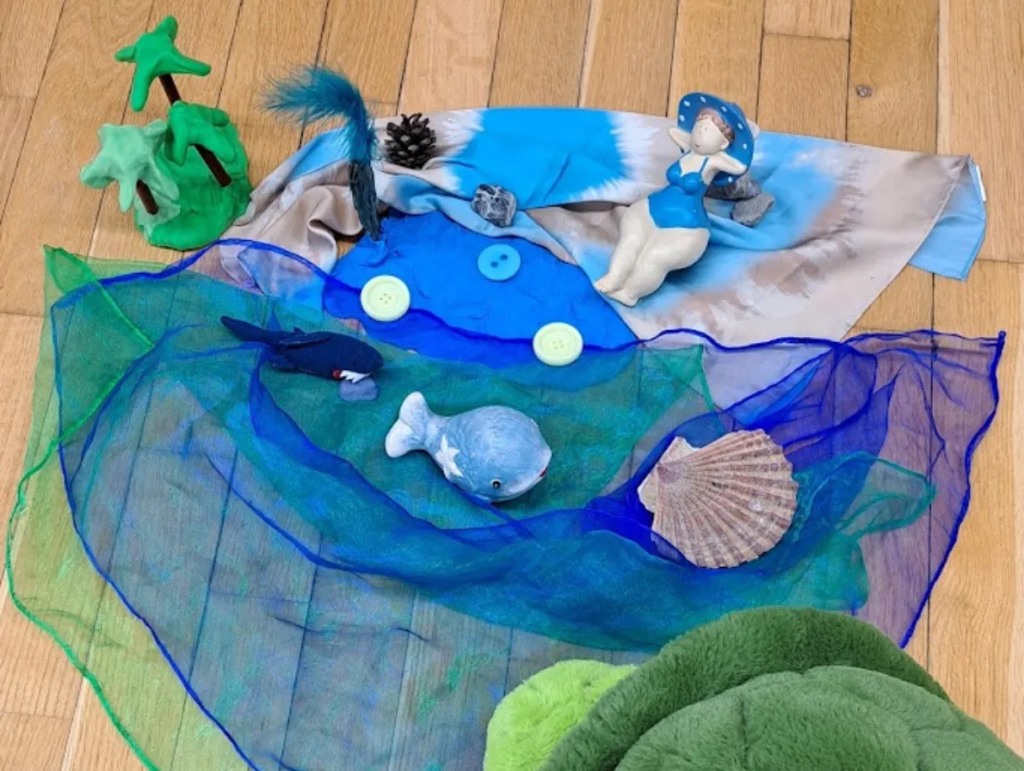
Visual example of dramatherapy in practice
Drama group training

A Creative Way To Explore Feelings

Dramatherapy is a creative, clinical form of psychological therapy with its roots in theatre and drama. Through creative and dramatic structures, it helps people explore personal and group issues, express feelings and make sense of their experiences.

Dramatherapists may use improvisation, movement, voice work, stories and scripts, puppets and objects, masks, ritual, role play and theatre games. You do not need any experience of drama or acting: it is about using the imagination safely, not performing.

In the UK, dramatherapy is a regulated profession. Every dramatherapist must be registered with the Health and Care Professions Council (HCPC).

Who Is Dramatherapy For?

Dramatherapy can help people of all ages and abilities, and is especially useful for people who find talking therapies difficult. We often work with:

  • Children and young people with anxiety, low mood, anger or other emotional difficulties
  • Children who have experienced trauma, loss, neglect or disrupted attachments, including children in foster care and adoption
  • Adults and children with learning disabilities
  • Autistic children and adults, and people with other developmental needs
  • Families and groups who want to work on relationships and communication

How Dramatherapy Can Help

Expressing Feelings

A safe way to explore feelings that are hard to put into words

Making Sense of Experiences

Using story and role to see things from a new distance

Building Confidence

Developing self-esteem, communication and social skills

Strengthening Relationships

Supporting attachment, trust and connection

What Happens In a Dramatherapy Session?

First Contact

An informal conversation about what you are looking for.

Assessment

We meet to understand needs, agree goals and decide whether dramatherapy is the right fit.

Sessions

Regular sessions, one-to-one, as a family or in a group, using the creative methods that suit the person best.

Reviews

We review progress together and agree how many more sessions are needed. There is no minimum or maximum number.

Endings

We plan endings carefully, so the work closes in a safe and positive way.

Frequently Asked Questions

No. Dramatherapy is not about performing or being “good” at drama. It uses play, story and imagination in whatever way feels comfortable for you.

Yes. Play and story are natural ways for children to express themselves, so dramatherapy works well with children of all ages, including the very young.

Sessions are based on need, so there is no minimum or maximum. We agree a plan together at the start and review it regularly.

What you share in sessions is kept confidential, with some limits, for example if there are concerns about someone’s safety. We explain this clearly at the start.

Drama classes focus on learning and performing. Dramatherapy is a clinical therapy delivered by an HCPC-registered professional, focused on emotional wellbeing rather than performance.

At our base in Wombourne, in schools or in other community settings across the West Midlands and South Staffordshire.

Find Out More

British Association of Dramatherapists

The professional body for dramatherapists in the UK

Health and Care Professions Council

Check a dramatherapist’s registration by surname or number

The Dramatherapy Dream

The archive of Sue Jennings, one of the founders of dramatherapy in the UK

Neuro-Dramatic-Play Ltd

Training and learning programmes in Neuro-Dramatic-Play

Community Drama

Dr Clive Holmwood’s research, publications and consultancy

Games for Building Secure Relationships

For anyone working with young children